
Charleston County Jail Roster Overview
The Charleston County Sheriff's Office runs the Charleston County Inmate Search portal at inmatesearch.charlestoncounty.gov. Sheriff Carl Ritchie, who was elected in November 2024, leads the agency. The portal's heading reads "Search for Current Inmates," and the page carries a clear notice: "All inmates are innocent until proven guilty in a court of law." The search covers people held at the Sheriff Al Cannon Detention Center in North Charleston. It also lets you search past bookings by checking a single box, which means you can find people who have already been released if you know the rough time frame.
One thing to know before you start. The Sheriff's Office has, since early 2026, delayed posting some booking data online. The stated reason is to reduce bail-scam calls that target families right after an arrest. Results may not be instant. If a search turns up nothing but you have reason to believe someone is in custody, call the detention center directly. The after-hours line stays open around the clock.
The roster only covers the county detention center. People transferred to a South Carolina state prison are tracked through the South Carolina Department of Corrections inmate search. Federal detainees are found through the Bureau of Prisons inmate locator. Immigration holds at federal facilities are a separate system entirely.
A look at the Charleston County Public Index court search confirms how case records relate to the booking data you see on the inmate portal.
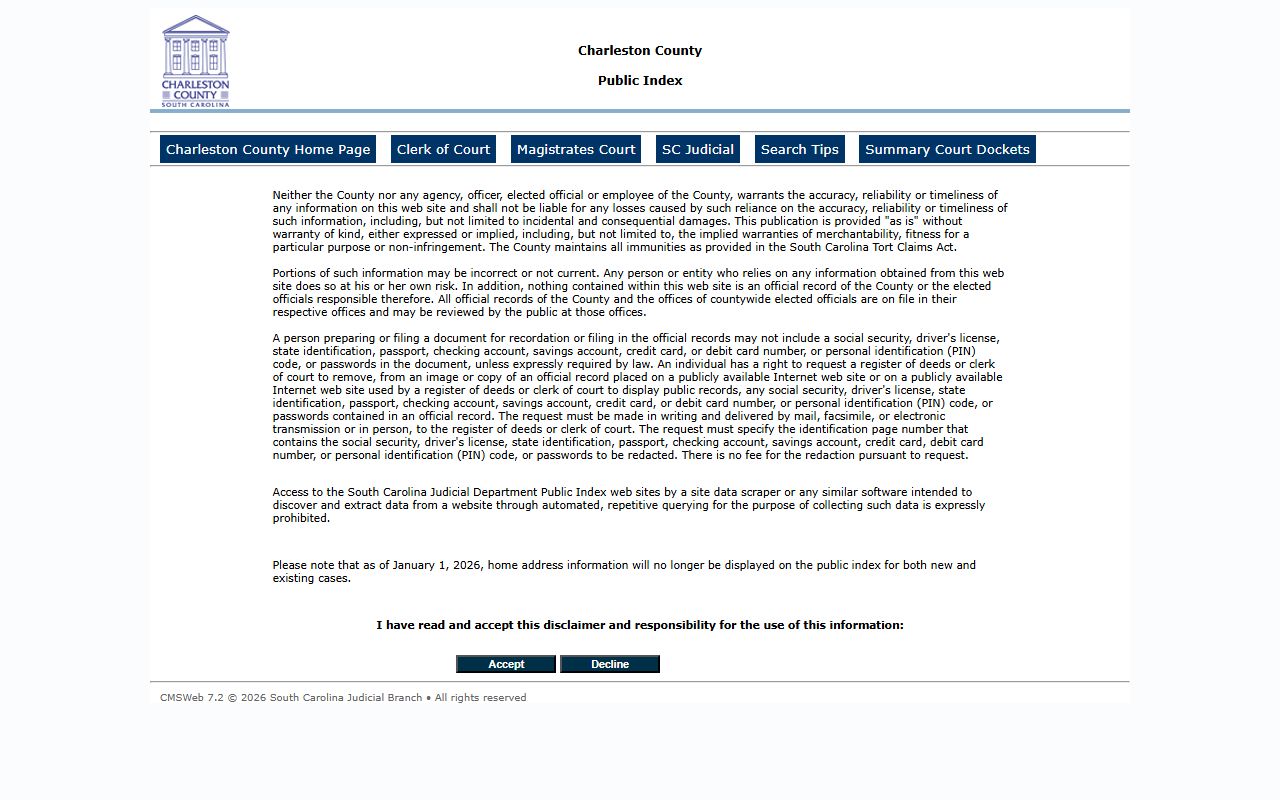
The Charleston County Public Index at jcmsweb.charlestoncounty.gov links a booking to the full General Sessions criminal case once charges are filed with the Clerk of Court.
How to Use the Charleston County Inmate Roster
Open the portal at inmatesearch.charlestoncounty.gov. The form is straightforward. You do not need an account or a login. A reCAPTCHA box sits at the bottom of the form and must be checked before the Search button becomes active. The page offers three action buttons: Search, Clear, and Home. A Feedback button sends email directly to the Sheriff's inmate search team at INMATE_SEARCH@charlestoncounty.org if you spot a data error or have a question about the portal.
- Go to inmatesearch.charlestoncounty.gov and wait for the form to load.
- Type the last name in the Last Name field. Add a first name to narrow the list when the last name is common.
- If you want past bookings as well as current holds, check the "Show Past Bookings" box before you search.
- Use the Booking Date or Arrest Date range pickers to filter by a time window when you know roughly when the arrest occurred.
- If you have an inmate number from a previous booking or from a court document, enter it in the Inmate Number field. Numbers are limited to ten characters.
- Check the reCAPTCHA box to confirm you are not a bot, then click Search.
- Review the result list and click a name to open the full inmate profile with charges, bond, and booking details.
Soundex Search: The portal offers a Soundex checkbox. Soundex is a phonetic algorithm that finds names that sound like what you typed even if the spelling differs. Use it when you are unsure of the exact spelling of a name.
Inmate Search Fields on the Charleston County Portal
The portal accepts more filter options than most county jail search tools. Each field is optional except for the reCAPTCHA, which blocks automated queries. You can run a broad search with just a last name or a precise search with a name plus date ranges and an inmate number all at once. The table below lists every field the search form provides.
| Field Label | Type | Required | Notes / Format |
|---|---|---|---|
| Last Name | Text | No (but recommended) | Primary search field; start here for a name lookup. |
| First Name | Text | No | Add with last name to reduce a long result list. |
| Booking Date From | Date / datepicker | No | MM/DD/YYYY format; minimum date is 100 years before today. |
| Booking Date To | Date / datepicker | No | MM/DD/YYYY; maximum date links to the "From" date logic. |
| Arrest Date From | Date / datepicker | No | MM/DD/YYYY; calendar icon on the right side of the field. |
| Arrest Date To | Date / datepicker | No | MM/DD/YYYY; pairs with Arrest Date From to set a range. |
| Soundex | Checkbox | No | Returns phonetically similar names; useful for uncertain spellings. |
| Inmate Number | Text | No | Maximum 10 characters; enter if you have a booking or case number. |
| Show Past Bookings | Checkbox | No | Expands results beyond current inmates to include released persons. |
| reCAPTCHA | Checkbox widget | Yes | Must be completed before the Search button activates. |
| Search | Submit button | n/a | Runs the query with your current filter values. |
| Clear | Submit button | n/a | Resets all fields to blank. |
| Home | Submit button | n/a | Returns to the portal home page. |
The Magistrate Courts Hearings page lists the bond schedule that ties directly to how fast a new booking moves from the roster to a court appearance.
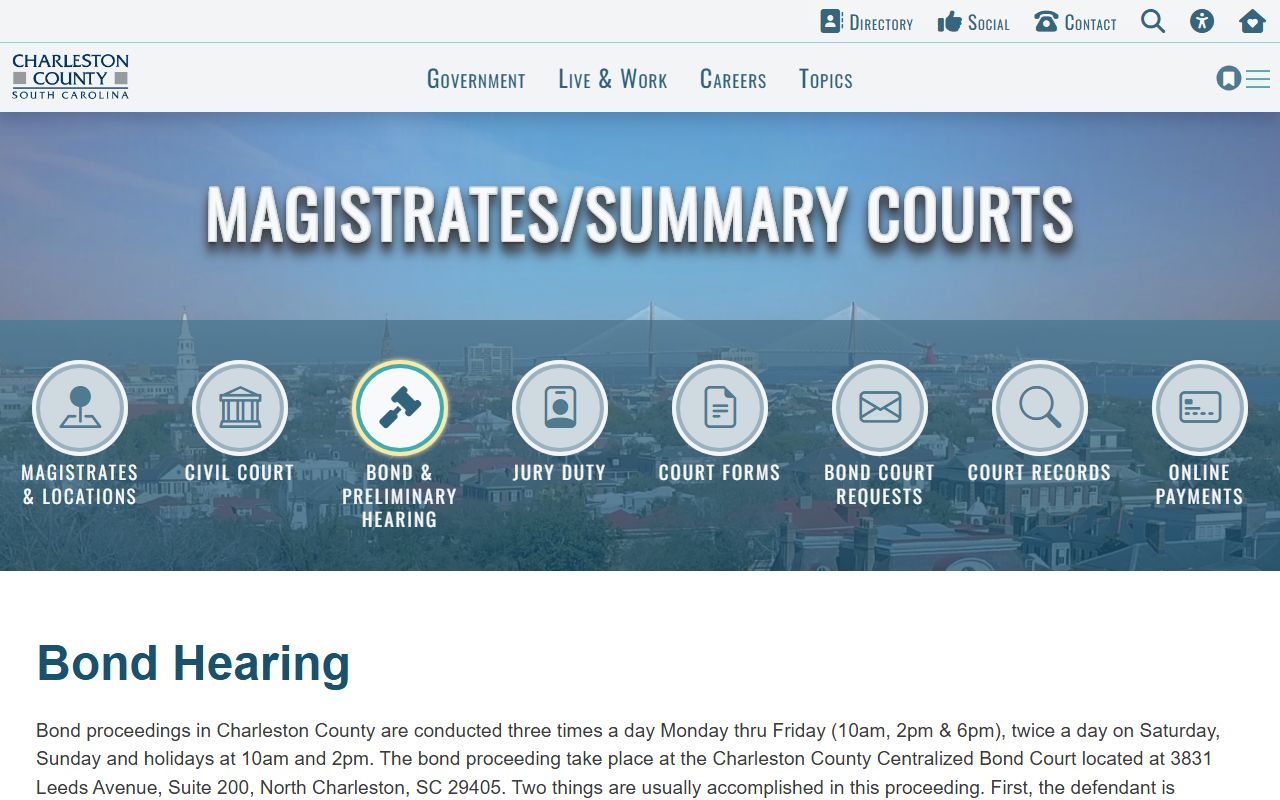
The Charleston County Magistrate hearings page shows the bond-court times and how new arrestees move from the detention center to their first appearance.
What a Charleston County Inmate Profile Shows
When you click a name in the search results, a profile page opens with details on that booking. The reCAPTCHA and live-postback design of the portal blocks automated retrieval of a sample profile, but the fields below reflect what the search form collects plus what the official portal purpose and related county processes confirm. Booking and arrest dates, the inmate number, and charge data are central to every profile because those are the exact fields you can filter by in the search. Bond information connects to the Centralized Bond Court process. The table sets out the expected field inventory.
| Field | What It Shows |
|---|---|
| Inmate Name | Full legal name of the person booked. |
| Inmate Number | The unique booking identifier assigned by the detention center; used for VINE status checks. |
| Booking Date | Date the person was processed into the detention center. |
| Arrest Date | Date of the underlying arrest, which may differ from the booking date. |
| Current / Past Status | Whether the person is still in custody or has been released. |
| Charges | The offenses the person is held on at the time of booking. |
| Bond Amount | Bond set at the Centralized Bond Court hearing, if applicable. |
| Case / Warrant Number | Links to the General Sessions or magistrate case in the court system. |
Note: Profile data for a specific booking may not appear immediately because the Sheriff's Office began delaying some online posting in early 2026 to reduce bail-scam targeting of families.
A view of the Sheriff's Warrants page shows how warrant data connects to inmate status for people held on an active warrant.
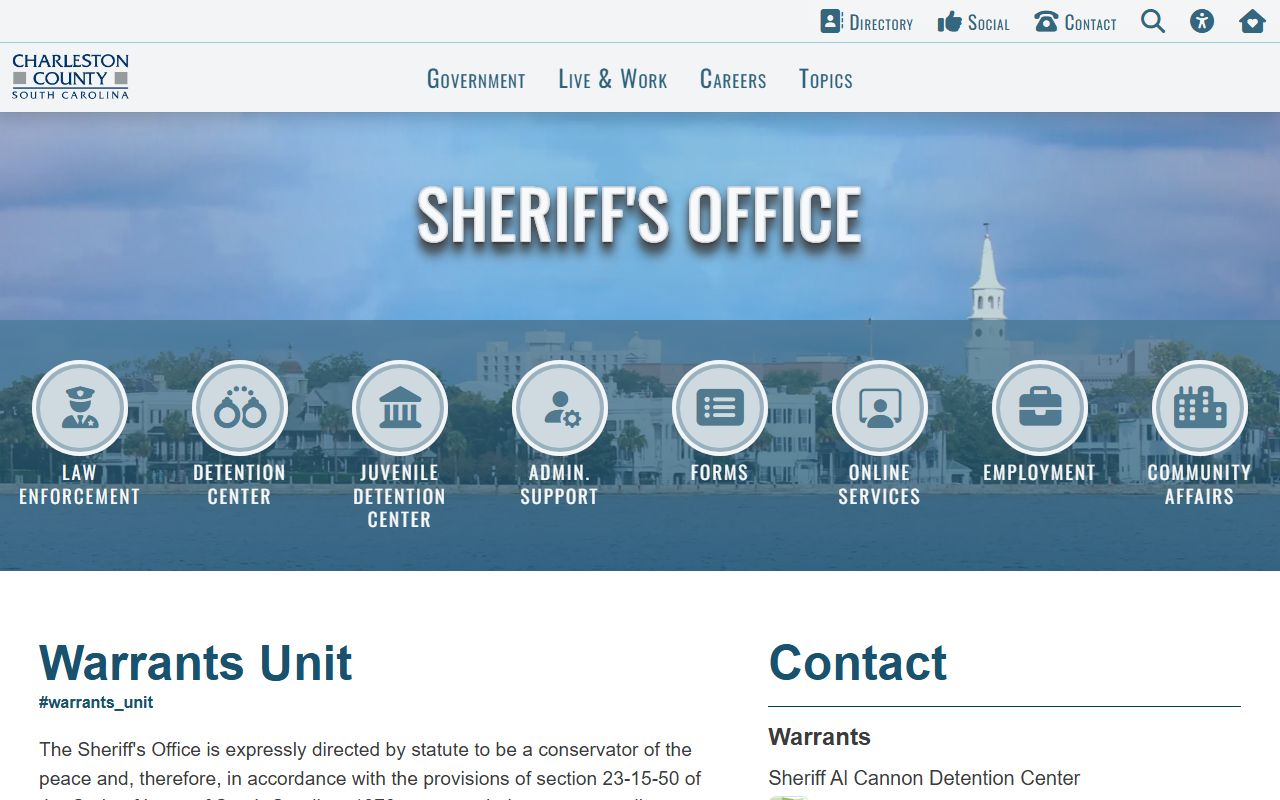
The Charleston County Sheriff's Warrants page explains how the Warrants Unit maintains and verifies warrant information and how it connects to detention-center holds.
Charleston County Detention Center Contact Information
All people booked on county charges are held at the Sheriff Al Cannon Detention Center on Leeds Avenue in North Charleston. The facility is nationally accredited by the American Correctional Association, and its health-care operations hold accreditation from the National Commission on Correctional Health Care. The detention center sits on the same Leeds Avenue campus as the Centralized Bond Court and the Sheriff's Warrants Office. Arriving at the right building matters because the addresses are close but distinct.
Sheriff Al Cannon Detention Center
3841 Leeds Avenue
North Charleston, SC 29405
(843) 529-7300
After-hours: (843) 202-1700
Centralized Bond Court
3831 Leeds Avenue, Suite 200
North Charleston, SC 29405
Mon-Fri: 10 AM, 2 PM, 6 PM hearings
Sat, Sun, Holidays: 10 AM, 2 PM hearings
Detention Victim Services
3841 Leeds Avenue
North Charleston, SC 29405
(843) 529-7471
Civilian victim advocates on staff
Booking Process at the Charleston County Jail
After a person is arrested and charges are reviewed, the detention center begins intake. The Dress-Out department issues uniforms, linen, and personal hygiene items. Clothing, personal property, and valuables go into secured storage rooms. When space is short, excess property may be returned to the arresting officer for separate storage. A booking search on the inmate portal can take a little time to reflect all of this because data entry happens during a busy intake process.
Several distinct units handle the paperwork side of detention. Inactive Records maintains inmate files and prepares General Sessions bonds and jail-time verifications for released inmates. It also handles expungements and transfers older inactive files to the Charleston County Records Center. Records Releasing interprets and processes court-issued commitments, bonds, and orders. That office maintains sentencing documents and makes sure release happens when a court order directs it. Out Processing returns personal and valuable property to a person at release. Transportation moves inmates to court appearances, medical facilities, the South Carolina Department of Corrections, federal prisons, and other locations, and it uses one sergeant and fourteen detention officers to do it.
Bond Court Hearing Schedule
A person who is booked gets a bond hearing at the Centralized Bond Court at 3831 Leeds Avenue, Suite 200. A magistrate sets bond at that hearing unless the charge is punishable by capital punishment or life in prison, or bond is otherwise beyond magistrate authority. No plea is entered at bond. The table below shows when hearings run each week.
| Days | Hearing Times | Location |
|---|---|---|
| Monday through Friday | 10:00 AM, 2:00 PM, 6:00 PM | Centralized Bond Court, 3831 Leeds Ave., Suite 200 |
| Saturday, Sunday, and Holidays | 10:00 AM, 2:00 PM | Centralized Bond Court, 3831 Leeds Ave., Suite 200 |
Victim Notification and VINE Service
Victims and interested parties can sign up for automatic alerts when an inmate is released, transferred, or escapes. The South Carolina Victim Notification system, known as VINE or SAVIN, handles this for Charleston County. savin.sc.gov and the national portal at VINELink both connect to the same system. The service is free and confidential through the Charleston County Sheriff's Office.
To register by phone, call (866) 727-2846. VINE will ask for a telephone number and a four-digit PIN of your choosing. You can register more than one phone number. If VINE calls and no one answers or an answering machine picks up, the system continues calling for up to 24 hours until someone enters the PIN to confirm receipt of the notice. South Carolina Code S.C. Code § 16-3-1530 requires agencies with custody or custodial supervision to make a reasonable attempt to notify registered victims of release, escape, or transfer. Detention Victim Services at (843) 529-7471 can also help with notification setup and questions.
A look at the VINELink national notification portal shows how the service works for victims tracking a Charleston County inmate across different facilities.
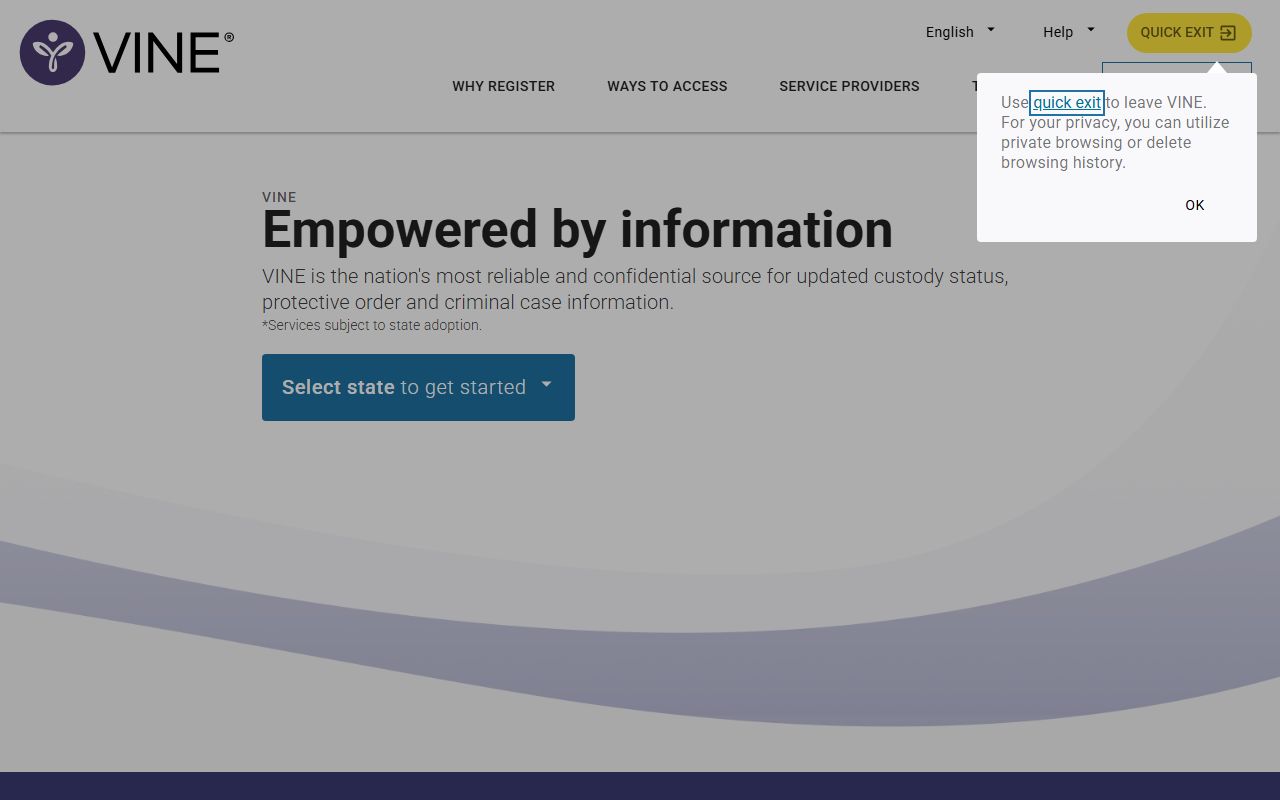
The VINELink portal at vinelink.com lets registered users track notification status and update contact information from any device.
Visitation and Mail at the Detention Center
Visitors to the Sheriff Al Cannon Detention Center must set up an account at www.SECURUSTech.net before scheduling a visit. Securus handles both in-person visit scheduling and remote video visits. A detained resident has the right to refuse a visitor, so a confirmed appointment does not guarantee access. Out-of-state visitors who present an out-of-state photo ID may be allowed one unscheduled visit if space is available at the facility at that time.
Mail rules changed as of May 1, 2023. The detention center no longer accepts personal physical mail. All personal mail now goes through a digital scanning process for safety reasons. The facility uses a vendor service to scan and deliver mail digitally to residents. Legal mail, which includes correspondence from attorneys, follows separate handling rules and should be confirmed directly with the detention center before mailing. For the most current mail vendor address and procedures, check the official detention page at charlestoncounty.gov/departments/sheriff/detention.php before sending anything.
Phone calls and video visits are arranged through Securus as well. Commissary and money deposits for an inmate's account are handled through the vendor services the detention center uses. Confirm current deposit methods, fees, and kiosk locations with the detention center directly, since vendor arrangements can change.
The Ninth Circuit Solicitor's Office works closely with the detention center on cases that come through it, including expungements and victim-witness coordination.
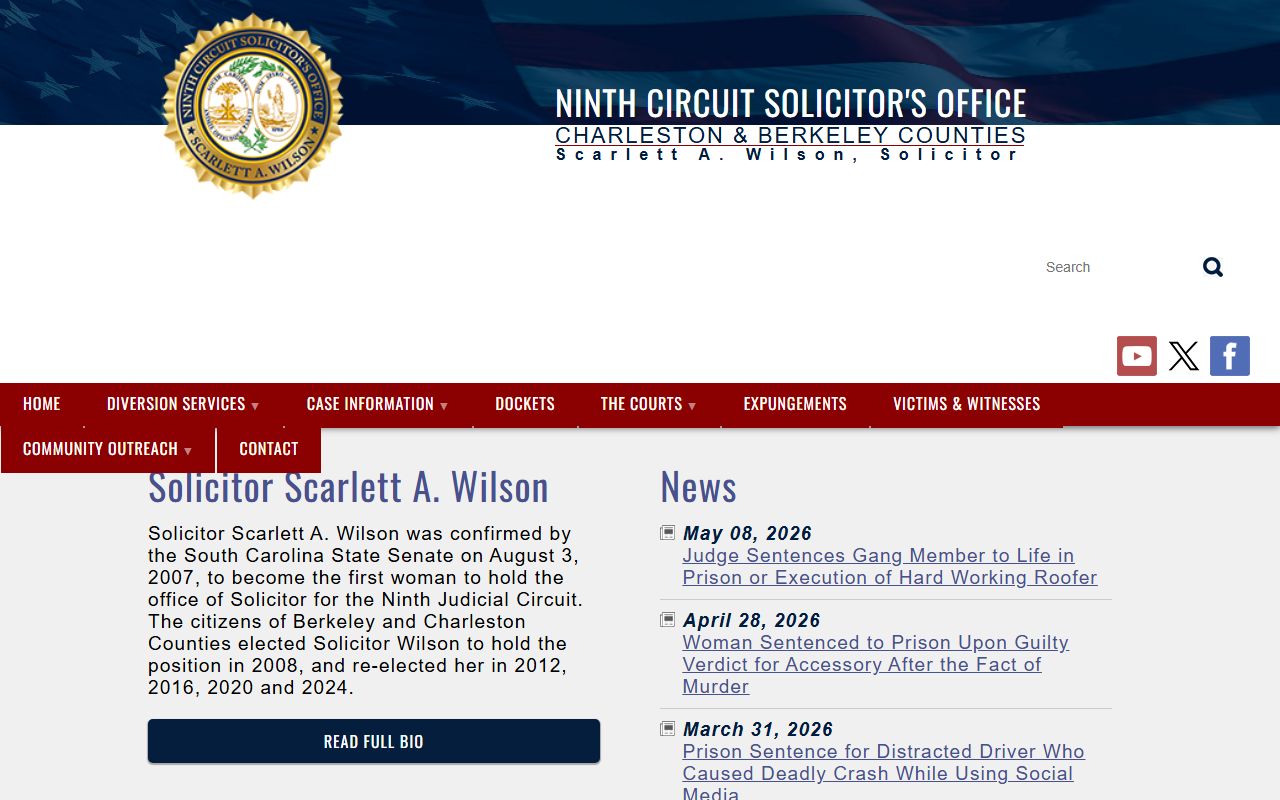
The Ninth Circuit Solicitor's Office at scsolicitor9.org covers Charleston and Berkeley Counties and handles prosecution, victim-witness services, and pre-trial intervention for people in the county system.
Expungement After a Charleston County Arrest
A Charleston County arrest that ended in a dismissal, not-guilty verdict, or nol prossed charge may be eligible for expungement. The path starts with the Sheriff's Office, not the court. A person who was arrested by the Charleston County Sheriff's Office gets a disposition document from Sheriff's Records at 3505 Pinehaven Drive, North Charleston, SC 29405. That document is then taken to the Ninth Circuit Solicitor's Office at the O.T. Wallace County Office Building, 101 Meeting Street, Charleston, SC 29401. The Solicitor decides if the case qualifies for an order of expungement. Fees are paid to the solicitor by separate certified checks or money orders, and the Clerk of Court charges a $35 fee when the expungement order is filed. An expunged record is removed from public view, which means it will no longer appear in the inmate search or in court records available to the public.
South Carolina's expungement statute framework is explained on the official state legislature site.
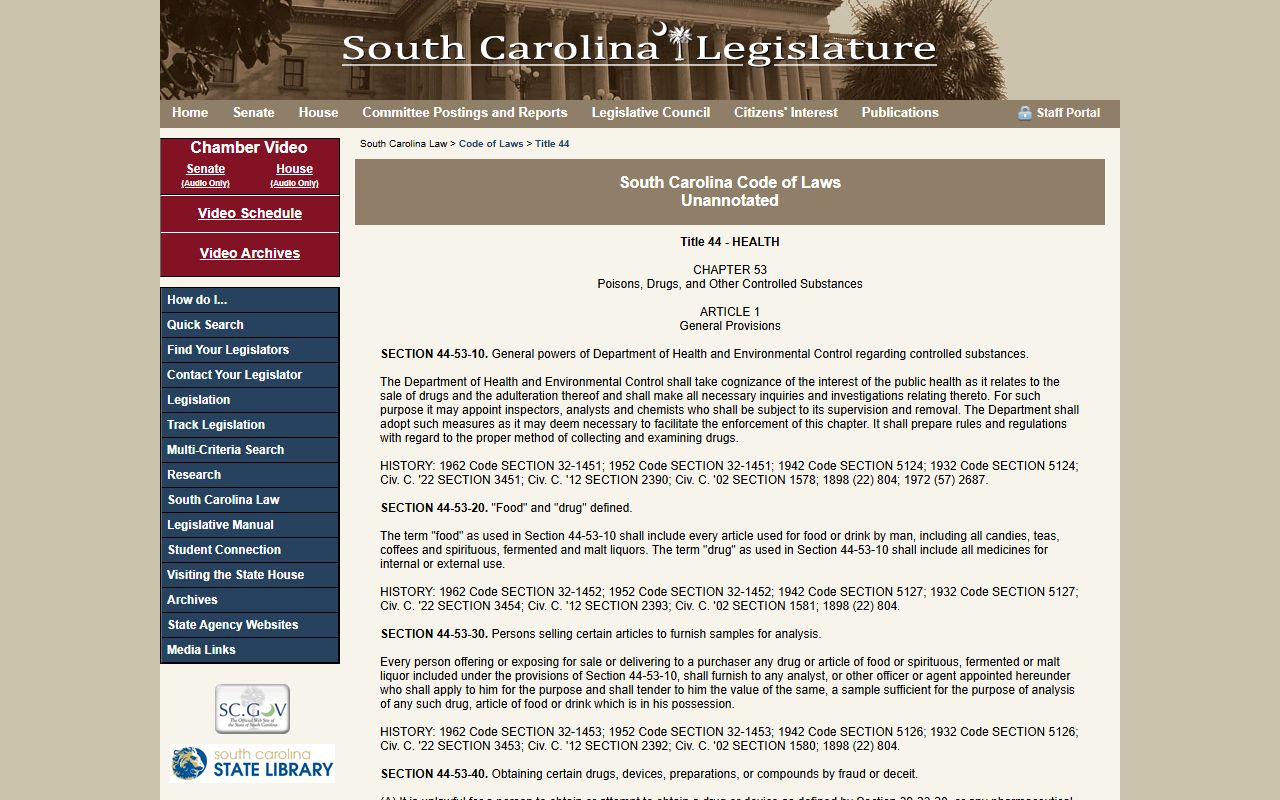
The South Carolina Code at scstatehouse.gov covers the statutory basis for conditional discharge and related expungement provisions that apply to certain first-offense charges handled through the summary and circuit courts.